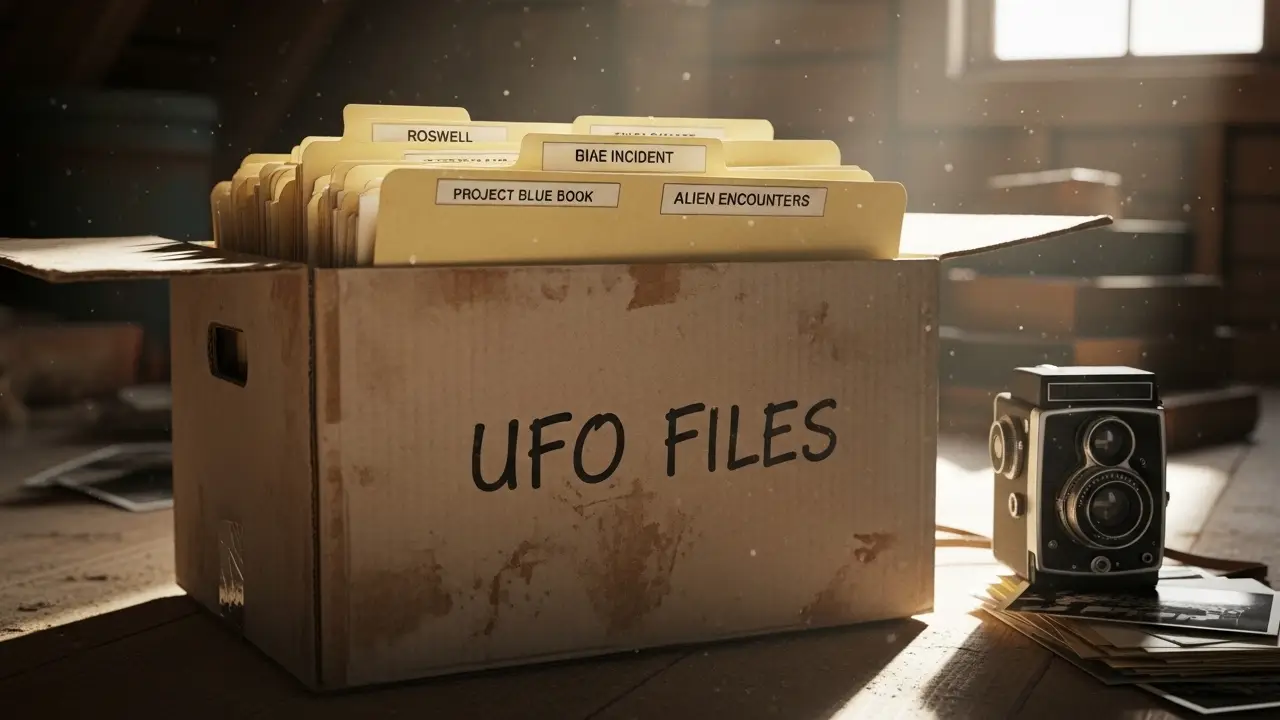
The topic of UFO files has captured global attention for decades, but recent disclosures and declassified reports have brought renewed focus to the mystery. Governments, researchers, and scientists are now taking a more serious and transparent approach toward what are officially called Unidentified Aerial Phenomena (UAP).
This article explores what UFO files are, what newly released documents reveal, and how these findings impact science, national security, and public curiosity. The aim is to provide clear, factual, and well-researched information that helps readers understand this complex topic without exaggeration or speculation.
What Are UFO Files?
UFO files refer to official documents, reports, and data collected by governments, military agencies, and research organizations about unidentified flying objects or aerial phenomena. These files often include radar data, pilot observations, satellite images, and witness testimonies.

In recent years, several governments have declassified portions of these files to improve transparency and encourage scientific investigation. The focus has shifted from sensational claims to careful analysis and documentation.
Why Governments Are Releasing UFO Files
There are several reasons why governments are now sharing UFO-related information with the public. One major factor is increased demand for transparency. Citizens and researchers have long requested access to such data.
Another reason is national security. Some unidentified aerial objects demonstrate unusual flight patterns that cannot be easily explained. Understanding these phenomena is important for defense and aviation safety.
Key Findings From Recent UFO Files
Recent UFO files reveal several interesting patterns and observations. While many sightings have logical explanations such as drones, weather balloons, or sensor errors, some cases remain unexplained.
Reports indicate that certain objects can move at high speeds, change direction rapidly, and operate without visible propulsion systems. However, experts caution that these observations do not confirm extraterrestrial origin but highlight the need for further study.
Scientific Perspective on UFO Files
Scientists approach UFO files with skepticism and curiosity. The goal is to analyze data objectively and eliminate known explanations before considering unknown possibilities.
Research institutions emphasize the importance of high-quality data collection. Improved sensors, tracking systems, and reporting standards are helping researchers better understand aerial anomalies.
Impact on Aviation and Safety
One practical concern related to UFO files is aviation safety. Pilots have reported encounters with unidentified objects during flights, which can pose potential risks.
Authorities are now encouraging pilots to report such sightings without fear of stigma. This helps create a more accurate database and improves safety protocols for both military and civilian aviation.
Public Interest and Media Coverage
The release of UFO files has generated significant public interest. Media coverage often highlights the mystery surrounding unexplained cases, but it is important to separate facts from speculation.
Reliable reporting focuses on verified information, official statements, and scientific analysis rather than sensational headlines. This approach helps build a more informed public understanding.
Challenges in Analyzing UFO Files
Analyzing UFO files comes with several challenges. Data can sometimes be incomplete, inconsistent, or affected by technical limitations. Weather conditions, sensor errors, and human perception can all influence observations.
Additionally, some information may remain classified for security reasons, limiting full public access. Researchers must work within these constraints to draw accurate conclusions.

Future of UFO Research
The future of UFO files research looks promising. Governments and independent organizations are investing in better technology and collaborative studies.
International cooperation may also play a key role, as aerial phenomena are not limited by national borders. Shared data and joint research efforts can lead to more comprehensive findings.
Overview of UFO Files Data
| Feature | Details |
|---|---|
| Data Sources | Military radar, pilot reports, satellite imagery |
| Common Observations | High-speed movement, unusual flight patterns |
| Explained Cases | Drones, weather balloons, aircraft, natural phenomena |
| Unexplained Cases | Limited data or unusual behavior requiring further analysis |
| Purpose of Files | Research, safety, and national security |
Are UFO Files Evidence of Extraterrestrial Life?
One of the most common questions is whether UFO files prove the existence of extraterrestrial life. Currently, there is no verified scientific evidence that confirms this.
Most experts agree that while some cases remain unexplained, they should not be immediately attributed to alien activity. Scientific investigation requires careful evaluation and evidence-based conclusions.
Importance of Responsible Reporting
Responsible reporting plays a crucial role in how UFO files are understood. Accurate information helps prevent misinformation and unnecessary fear.
Readers are encouraged to rely on credible sources and official reports when exploring this topic. Balanced coverage supports better awareness and informed discussions.
Conclusion
The growing availability of UFO files marks an important step toward transparency and scientific inquiry. While many questions remain unanswered, ongoing research continues to shed light on unidentified aerial phenomena.
Understanding these files requires a balanced approach that combines curiosity with critical thinking. As technology advances and more data becomes available, the mystery surrounding UFOs may become clearer over time.
FAQs About UFO Files
1. What does UFO stand for?
UFO stands for Unidentified Flying Object, referring to any aerial object that cannot be immediately identified.
2. Are UFO files publicly available?
Some UFO files have been declassified and released to the public, while others remain restricted for security reasons.
3. Do UFO files confirm alien existence?
No, there is no confirmed scientific evidence in UFO files that proves the existence of extraterrestrial life.
4. Why are UFO sightings increasing?
Improved technology, better reporting systems, and increased awareness contribute to more recorded sightings.
5. How are UFO sightings investigated?
Experts analyze radar data, visual evidence, and environmental conditions to determine possible explanations.