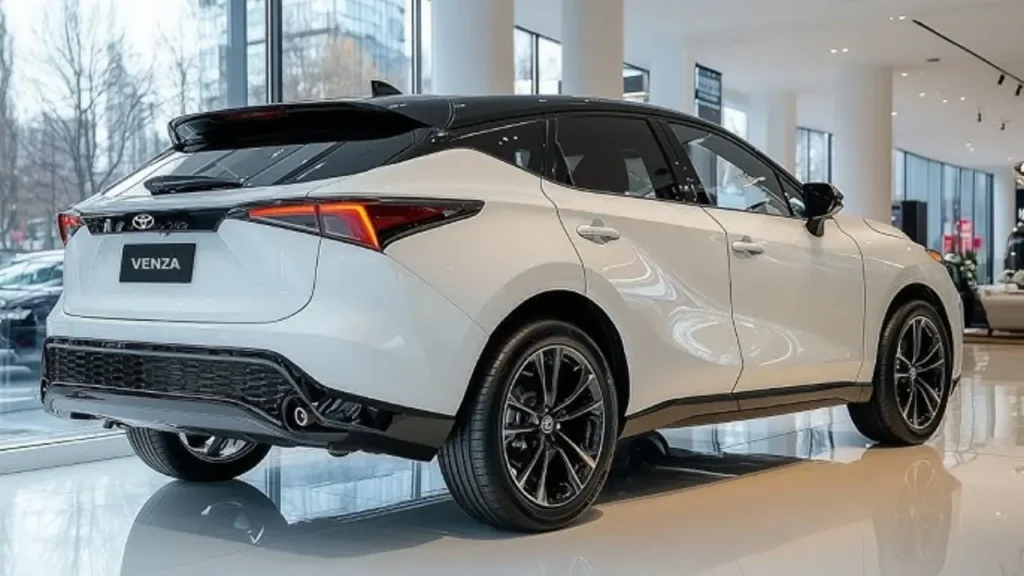
Remember the Toyota Venza? It quietly left the scene a few years ago, leaving behind a loyal fanbase that appreciated its unique blend of sedan-like comfort and SUV practicality. Well, guess what? Toyota is bringing it back for 2026, and it’s not the same Venza you might recall. The new model arrives as a sophisticated hybrid-only SUV, designed for people who value a peaceful, fuel-sipping commute over aggressive styling or neck-snapping acceleration.
I’ve been following the buzz around this reboot, and honestly, it makes a lot of sense for where the market is heading. More drivers are asking: “How can I lower my fuel bills without giving up space and comfort?” The 2026 Venza seems to be Toyota’s answer. Let’s walk through what makes this comeback worth your attention—from its quiet, upscale cabin to that impressive hybrid mileage.
First Impressions: Understated Elegance, Not Loud Sports
You won’t find any massive, angry grilles or fake vents on the 2026 Toyota Venza. Instead, Toyota’s designers went for a clean, almost graceful look. The front end features slim full-LED headlights that flow into a subtle grille. There’s a bit of chrome here and there, but it’s used sparingly—just enough to hint at luxury without screaming for attention.

From the side, the roofline slopes gently toward the back, giving it a coupe-like profile. But don’t worry—this doesn’t crush rear headroom. I’ve seen similar designs go wrong, but early reports suggest Toyota was careful to keep the back seat usable for adults. The aerodynamically designed alloy wheels aren’t just for show; they actually help reduce drag, which boosts fuel economy on the highway.
Overall, the Venza looks like it belongs in a nice neighborhood or a valet parking line. It’s the kind of car that draws a second glance because it’s tasteful, not because it’s trying too hard.
Under the Hood: Smooth Hybrid Power That Saves at the Pump
Here’s where things get interesting. The Toyota Venza 2026 is expected to come exclusively as a hybrid. That means a petrol engine working together with one or more electric motors. The goal isn’t to set lap records—it’s to make every drive feel effortless and quiet.
The electric motor handles the initial pull away from a stop and helps during low-speed cruising. This is when traditional SUVs are at their thirstiest, so the payoff is real. You’ll notice less engine drone in stop-and-go traffic, and your wallet will thank you at the gas station.
Speaking of savings, Toyota is targeting a fuel efficiency figure of around 32 KMPL (that’s roughly 75 MPG if you’re used to imperial gallons). Of course, real-world numbers vary depending on driving habits, but even if you land a bit lower, it’s still remarkable for a spacious SUV. For daily commuters or small families, this could mean filling up half as often as before.
What’s the driving experience like?
Smooth and predictable. The Venza isn’t built to win stoplight races. Instead, it delivers a linear, relaxed acceleration that feels perfectly at home in city traffic or on long highways. The continuously variable transmission (CVT) works seamlessly with the hybrid system, erasing any of the “rubber band” sensation that early CVTs were known for.
A Cabin That Prioritizes Peace and Quiet
One area where the 2026 Venza really shines is interior noise—or rather, the lack of it. Because the car can run on electric power alone at lower speeds, you get moments of near-silent driving. Toyota also added extra sound insulation in the doors, floor, and windows to block out road rumble and wind noise.
I’ve driven plenty of SUVs that claim to be “luxury quiet” but fail at 70 mph. Early feedback suggests the Venza actually delivers. It’s the kind of cabin where you can hold a conversation in normal voices, listen to a podcast without cranking the volume, or just enjoy the silence after a long day.
The suspension is tuned for comfort first. Bumps, potholes, and uneven pavement get smoothed over rather than transmitted to your spine. Steering is light and easy for parking, yet stable enough on the highway. It won’t feel sporty, but that’s not the point. The point is arriving relaxed.
Inside: Soft-Touch Materials and Logical Layout
Step inside, and you’ll find a cabin that feels more premium than the price tag might suggest. Soft-touch materials cover most surfaces you actually touch. The color palette leans toward warm grays, browns, or blacks—nothing flashy, just calming.
Toyota resisted the temptation to bury every control in a touchscreen. You still get physical knobs for climate control and volume, which I personally love. There’s nothing more frustrating than tapping a screen three times just to turn down the fan speed.
The seats are wide and supportive. Front occupants get power adjustments (likely standard on most trims), while rear passengers enjoy generous legroom. Even with the sloping roofline, headroom in the back is surprisingly adequate for adults up to around six feet tall.
Tech Features That Actually Make Sense
The 2026 Toyota Venza comes with a large touchscreen infotainment system. It’s not the biggest on the market, but the interface is snappy and easy to navigate. Wireless Apple CarPlay and Android Auto come standard, so you can leave those cables in your pocket.
Other expected goodies include:
- Wireless charging pad for compatible phones
- Multiple USB ports (front and rear)
- Digital instrument cluster displaying hybrid power flow, fuel economy, and more
- Steering-wheel-mounted controls for audio and driver assistance
One small gripe: some prototypes didn’t include a dedicated physical home button for the infotainment system. Hopefully that changes for production. But overall, the tech feels thoughtful rather than gimmicky.
Safety: Toyota’s Full Suite of Driver Aids
Toyota has built a strong reputation for safety, and the Venza 2026 continues that trend. You can expect their Safety Sense suite to come standard. That includes:
- Adaptive cruise control – maintains a safe distance from the car ahead
- Lane departure alert with steering assist – nudges you back if you wander
- Automatic emergency braking – detects pedestrians and vehicles
- Blind-spot monitoring with rear cross-traffic alert
These features don’t just add convenience; they genuinely reduce fatigue on long trips and add an extra layer of protection in busy city traffic. And of course, there are multiple airbags, ABS, and electronic stability control as standard.
How Does It Stack Up on Fuel and Eco-Friendliness?
Let’s talk numbers again. The claimed 32 KMPL (approx. 75 MPG imperial) puts the Venza in a league with top hybrid sedans, but in an SUV body. For comparison, many non-hybrid compact SUVs struggle to hit half that.
If you drive mostly in the city, you’ll see the biggest benefit. The electric motor handles stop-and-go traffic almost exclusively, so your engine only kicks on when needed. Over a year of commuting, that adds up to serious savings—potentially hundreds or even thousands of dollars depending on local fuel prices.
Lower emissions are a nice bonus, too. You’re burning less petrol, which means less CO2 and fewer local pollutants. It’s not a full EV, but it’s a meaningful step for drivers not ready to go plug-in just yet.
Who Is the Toyota Venza 2026 For?
This SUV isn’t trying to be everything to everyone. It’s aimed at drivers who:
- Want a spacious, comfortable daily driver without guzzling gas
- Appreciate a quiet, well-built interior over sporty handling
- Plan to keep their car for years (Toyota reliability is legendary)
- Don’t want the range anxiety or charging hassle of an EV
If you’re a young family, a professional with a long commute, or even a retiree looking for a no-drama vehicle, the Venza makes a lot of sense. It’s not flashy, but it’s practical, efficient, and genuinely pleasant to live with.
The Bottom Line: A Smart, Sensible Comeback
The 2026 Toyota Venza isn’t trying to reinvent the wheel. It’s taking everything Toyota does well—hybrid efficiency, build quality, comfort, and safety—and wrapping it in a handsome, understated package. You won’t win any drag races, but you’ll arrive at your destination feeling relaxed, and you’ll stop at the gas station half as often.
For drivers who prioritize real-world usability over performance numbers, the Venza stands out as one of the most well-rounded hybrid SUVs coming to market. It’s good to have the nameplate back, and honestly, it might be better than ever.
What do you think? Would you trade a bit of power for 32 KMPL and a silent cabin? Or are you holding out for a fully electric SUV? Let me know in the comments—I’d love to hear your take.

Hi, I’m Arsam, the author and creator of MTPHA.I have a strong interest in smartphone technology and the automotive industry, and I enjoy exploring new innovations, features, and trends in these fields. Through this website, I share my knowledge, research, and personal insights to help readers stay informed and up to date.