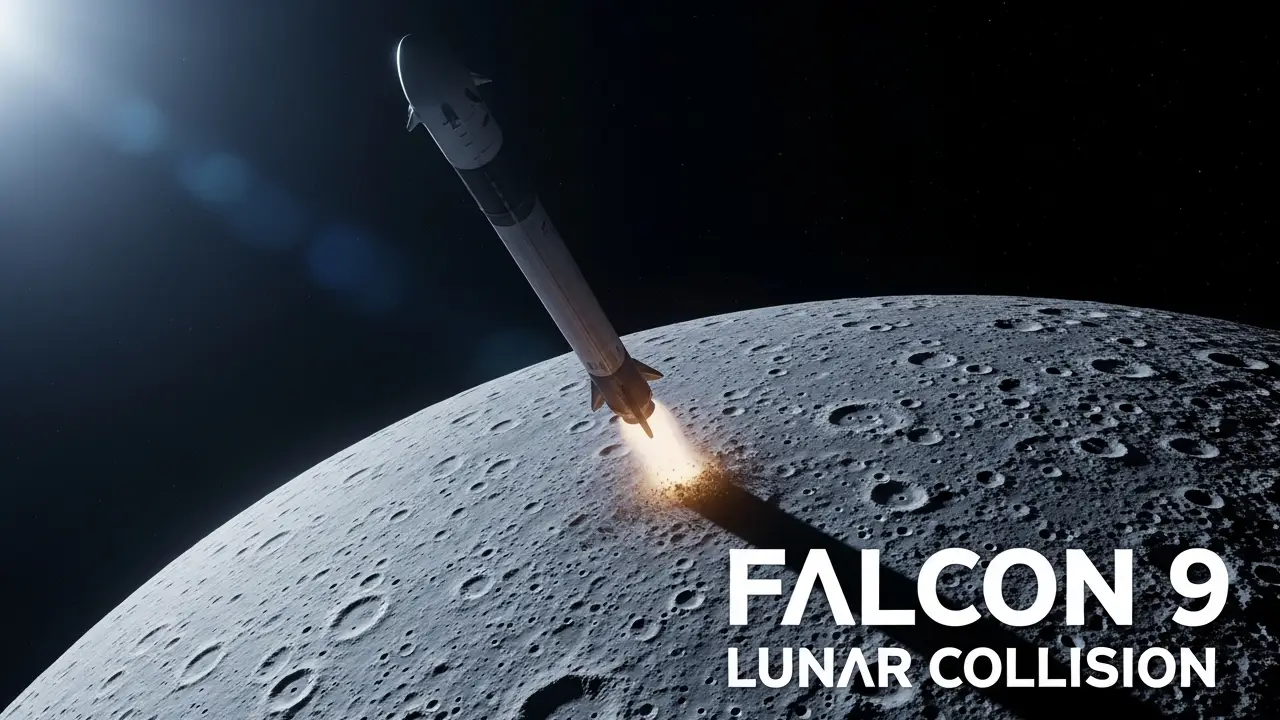
The topic of falcon 9 lunar collision has gained global attention among space enthusiasts and researchers. With increasing space missions and satellites being launched into orbit, incidents involving space debris are becoming more common. One such event involved a rocket stage believed to be linked with Falcon 9, which eventually collided with the Moon. This event has sparked discussions about space sustainability, orbital tracking, and future mission safety.
This article explores the full story behind the incident, what caused it, and why it is significant for the future of space exploration. It also explains the science behind such collisions in simple terms so readers can better understand the situation.

What is the Falcon 9 Rocket?
Falcon 9 is a reusable rocket developed by SpaceX. It is widely used for launching satellites, cargo missions, and even astronauts into space. One of its key advantages is its reusable booster, which reduces the cost of space travel.
However, not every part of the rocket returns to Earth. The upper stage, which helps deliver payloads into orbit, often remains in space after completing its mission. Over time, these leftover components can become space debris.
Understanding the Falcon 9 Lunar Collision
The falcon 9 lunar collision refers to an incident where a piece of rocket debris, initially thought to be from Falcon 9, impacted the Moon’s surface. This object had been drifting in space for years before gravity gradually altered its path toward the Moon.
Scientists tracked the object for some time but initially misidentified its origin. Later analysis suggested that it might not have been a Falcon 9 stage but another rocket component. Despite this confusion, the event remains significant because it highlighted how difficult it is to track space debris accurately.
How Did the Collision Happen?
The collision occurred due to natural orbital mechanics. After completing its mission, the rocket stage was left in a chaotic orbit influenced by Earth’s gravity, the Moon’s gravitational pull, and solar radiation pressure.
Over time, these forces changed its trajectory, eventually sending it toward the Moon. Unlike controlled missions, this was an uncontrolled descent, meaning no guidance system directed the object.
Impact on the Lunar Surface
When the object struck the Moon, it created a new crater on the lunar surface. Because the Moon lacks an atmosphere, objects do not burn up before impact, leading to direct and often powerful collisions.
Interestingly, researchers predicted that the impact would form a double crater, which is unusual and valuable for scientific study. Such impacts help scientists understand the Moon’s surface composition and impact dynamics.
Why This Event is Important
The falcon 9 lunar collision is important for several reasons. First, it shows how space debris can travel long distances and eventually collide with celestial bodies. Second, it highlights the growing issue of unmanaged objects in space.
As more countries and companies launch missions, the number of inactive objects in orbit continues to rise. Without proper tracking and disposal methods, these objects can pose risks to future missions.
Challenges in Tracking Space Debris
Tracking space debris is a complex task. Objects in space move at extremely high speeds and are influenced by multiple gravitational forces. Smaller objects are especially difficult to monitor.
In this case, even experts initially misidentified the object responsible for the collision. This demonstrates the limitations of current tracking systems and the need for improved monitoring technologies.
Space Debris and Future Risks
Space debris is becoming a major concern for the global space community. While the Moon is far from Earth, similar debris in Earth’s orbit can threaten satellites, space stations, and future missions.

If collisions occur in Earth’s orbit, they can create more debris, leading to a chain reaction known as the Kessler Syndrome. This could make certain orbits unusable for decades.
Efforts to Reduce Space Debris
Space agencies and private companies are working on solutions to reduce space debris. These include controlled re-entry of rocket stages, designing satellites that burn up after use, and developing debris removal technologies.
Some organizations are also improving tracking systems to better monitor objects in space. These efforts aim to make space exploration safer and more sustainable.
Scientific Value of Lunar Collisions
While unplanned, the falcon 9 lunar collision provides valuable scientific data. By studying the impact, scientists can learn more about the Moon’s surface structure and material composition.
Such data can help in planning future lunar missions, including landing sites and construction of lunar bases. Understanding how impacts affect the surface is crucial for long-term exploration.
Public Interest and Awareness
The incident has also increased public awareness about space debris and orbital safety. Events like these capture attention because they involve both advanced technology and natural cosmic processes.
Greater awareness can lead to more support for policies and technologies that promote responsible space exploration.
Conclusion
The falcon 9 lunar collision is more than just a space incident; it is a reminder of the challenges that come with modern space exploration. As humanity continues to expand its presence in space, managing debris and ensuring safety will become increasingly important.
This event highlights the need for better tracking systems, responsible mission planning, and international cooperation. It also offers valuable scientific insights that can guide future missions to the Moon and beyond.
Key Details
| Category | Details |
|---|---|
| Event Name | Falcon 9 Lunar Collision |
| Object Type | Rocket Upper Stage (Debris) |
| Impact Location | Far side of the Moon |
| Cause | Uncontrolled orbital decay and gravitational influence |
| Scientific Importance | Study of lunar surface and impact dynamics |
| Main Concern | Space debris management and tracking challenges |
FAQs About Falcon 9 Lunar Collision
1. What is the Falcon 9 lunar collision?
It refers to an incident where a rocket debris object, initially linked to Falcon 9, impacted the Moon’s surface.
2. Did Falcon 9 directly cause the collision?
Initial reports suggested this, but later analysis indicated the object might have been from another mission.
3. Why didn’t the object burn up before impact?
The Moon has no atmosphere, so objects do not burn up and instead hit the surface directly.
4. Is space debris a serious problem?
Yes, especially in Earth’s orbit, where it can damage satellites and create further debris.
5. What can be done to prevent such incidents?
Improved tracking systems, controlled re-entry, and responsible mission planning can help reduce risks.