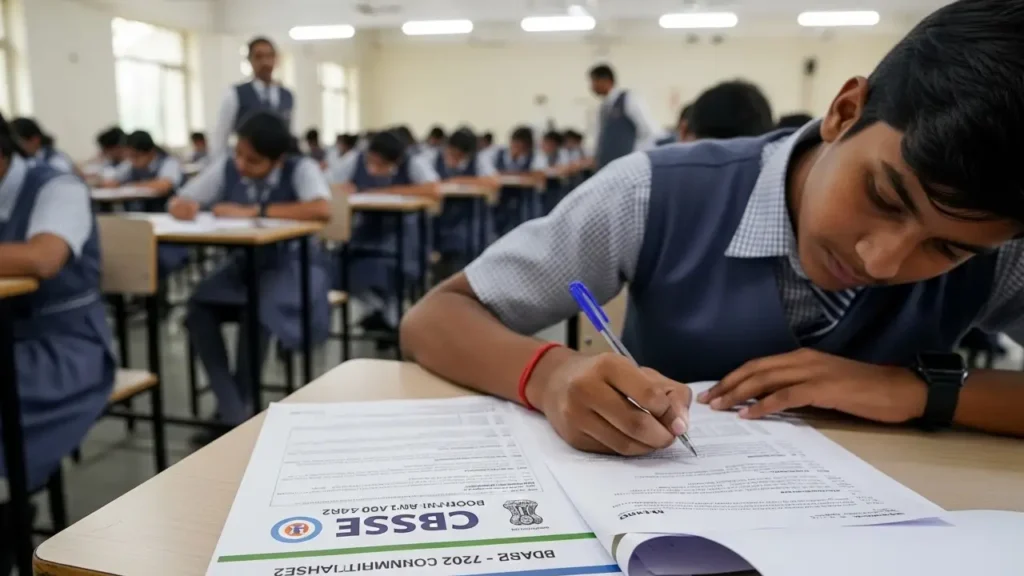
The CBSE Board Exam 2026 Phase 2 is gaining significant attention among students, parents, and educators across India. With changes in examination patterns and the introduction of a phased approach, the Central Board of Secondary Education (CBSE) aims to reduce stress and improve assessment quality. This article provides a detailed, easy-to-understand guide covering exam dates, syllabus, pattern, preparation tips, and key updates.
If you are preparing for the upcoming board exams, understanding CBSE Phase 2 exams 2026 is essential for planning your study strategy effectively. Let’s explore everything you need to know in detail.
What is CBSE Board Exam 2026 Phase 2?
The CBSE Board Exam Phase 2 is part of a two-phase examination system introduced to distribute academic pressure. Instead of conducting a single final exam, CBSE evaluates students in two parts throughout the academic year.

Phase 2 is considered the final and more comprehensive exam, covering the remaining syllabus and testing deeper conceptual understanding. It plays a major role in determining the final result.
CBSE Board Exam 2026 Phase 2 Expected Dates
While the official schedule will be released by CBSE, based on previous trends, the CBSE Board Exam 2026 Phase 2 is expected to take place between February 2026 and April 2026.
Students should regularly check official notifications and begin preparation early to avoid last-minute stress.
CBSE Phase 2 Exam Pattern 2026
The exam pattern for CBSE Phase 2 2026 focuses on testing analytical skills, conceptual clarity, and application-based learning. The question paper is designed to evaluate real understanding rather than rote memorization.
Here is a breakdown of the expected exam pattern:
- Subjective Questions (Long and short answers)
- Case-based Questions to test practical knowledge
- Competency-based Questions focusing on real-life applications
- Internal Choices for flexibility
CBSE Board Exam 2026 Phase 2 Syllabus
The CBSE Phase 2 syllabus includes the remaining portion of the academic curriculum that was not covered in Phase 1. It is typically more detailed and requires a deeper understanding of topics.
Students must thoroughly review the official syllabus and ensure they cover all chapters, especially high-weightage topics. NCERT books remain the primary source for preparation.
Important Highlights of CBSE Phase 2 Exams
| Feature | Details |
|---|---|
| Exam Name | CBSE Board Exam 2026 Phase 2 |
| Conducting Body | Central Board of Secondary Education (CBSE) |
| Expected Dates | February to April 2026 |
| Exam Mode | Offline (Pen and Paper) |
| Question Type | Subjective + Case-Based + Competency-Based |
| Difficulty Level | Moderate to High |
| Result Weightage | Major contribution to final result |
Why CBSE Introduced Phase 2 Exams?
The introduction of Phase 2 exams is aimed at reducing student stress and improving learning outcomes. By splitting exams into two parts, CBSE allows students to focus on smaller portions of the syllabus at a time.
This approach also encourages continuous learning and reduces dependence on last-minute preparation, making the evaluation system more balanced and fair.
Preparation Tips for CBSE Board Exam 2026 Phase 2
Preparing for the CBSE Phase 2 exams requires a strategic approach. Since this phase covers more complex topics, students should focus on understanding concepts deeply.
Here are some effective preparation tips:
- Create a Study Schedule: Allocate time for each subject and stick to a daily routine.
- Focus on NCERT Books: Most questions are directly or indirectly based on NCERT content.
- Practice Previous Papers: Solving past papers helps understand question patterns.
- Revise Regularly: Frequent revision improves retention and confidence.
- Take Mock Tests: Simulate exam conditions to improve time management.
Common Mistakes to Avoid in Phase 2 Exams
Many students lose marks due to avoidable mistakes. Being aware of these can help improve performance in CBSE Board Exam 2026 Phase 2.
- Ignoring important chapters with high weightage
- Relying only on notes instead of textbooks
- Lack of proper revision
- Poor time management during exams
- Not reading questions carefully
Subject-Wise Strategy for Better Scores
Each subject requires a different preparation strategy for CBSE Phase 2 exams. A balanced approach is necessary to score well.
Mathematics: Practice regularly and focus on formulas and problem-solving techniques.

Science: Understand concepts and diagrams clearly. Practice numericals and case-based questions.
English: Improve writing skills and practice comprehension passages.
Social Science: Focus on important dates, concepts, and map work.
How Phase 2 Impacts Final Result?
The CBSE Phase 2 exam has a significant impact on the final result. Since it covers advanced topics and carries substantial weightage, performance in this phase is crucial.
Students should treat Phase 2 as the main exam and prepare accordingly to achieve higher scores.
CBSE Board Exam 2026: Key Updates and Expectations
CBSE is continuously updating its evaluation system to align with modern education standards. The CBSE Board Exam 2026 Phase 2 is expected to emphasize skill-based learning and practical knowledge.
Students can expect more real-life application questions and fewer direct theoretical questions.
FAQs About CBSE Board Exam 2026 Phase 2
1. What is CBSE Board Exam 2026 Phase 2?
It is the second phase of board exams that evaluates the remaining syllabus and plays a major role in the final result.
2. When will CBSE Phase 2 exams 2026 be conducted?
They are expected to be held between February and April 2026.
3. Is Phase 2 more difficult than Phase 1?
Yes, Phase 2 is generally more detailed and concept-based, making it slightly more challenging.
4. How should I prepare for CBSE Phase 2 exams?
Focus on NCERT books, practice previous papers, and revise regularly.
5. Does Phase 2 affect the final result?
Yes, Phase 2 carries significant weightage and strongly impacts the final score.
Final Thoughts on CBSE Board Exam 2026 Phase 2
The CBSE Board Exam 2026 Phase 2 is an important milestone for students aiming for strong academic performance. With the right preparation strategy, consistent practice, and clear understanding of concepts, students can perform confidently.
Staying focused, managing time effectively, and following a structured study plan will help students succeed in this crucial phase. Keep updated with official announcements and continue preparing with dedication for the best results.


Hi, I’m Arsam, the author and creator of MTPHA.I have a strong interest in smartphone technology and the automotive industry, and I enjoy exploring new innovations, features, and trends in these fields. Through this website, I share my knowledge, research, and personal insights to help readers stay informed and up to date.