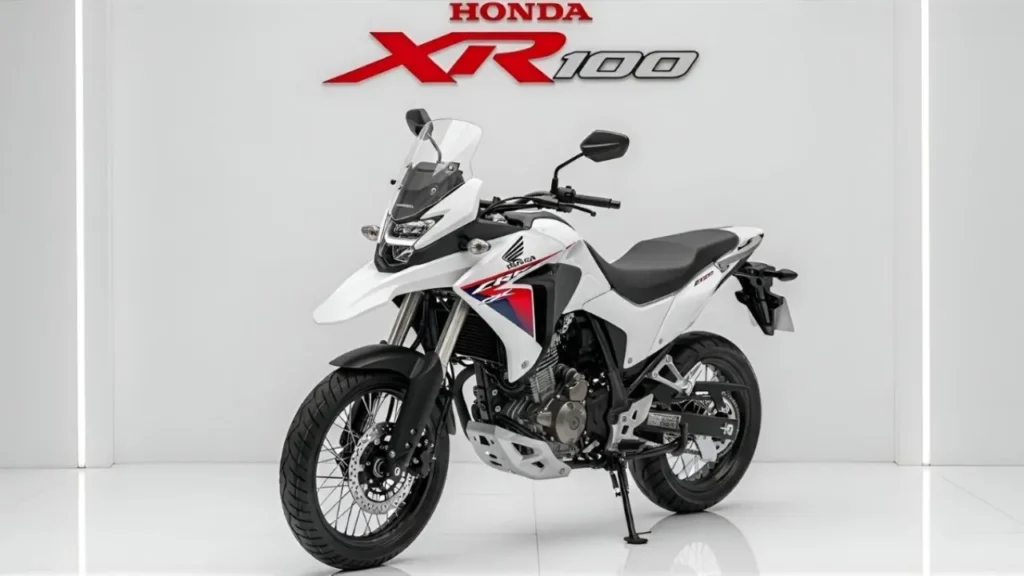
For decades, the Honda XR100 has been a gateway into off-road motorcycling for countless riders around the world. Known for its bulletproof reliability, simple mechanics, and forgiving nature, the XR series earned a loyal following among beginners, young riders, and families who wanted a dependable trail bike. After a period of quiet evolution, Honda has officially brought back the updated Honda XR100 2026 — a model that respects the original’s legacy while adding thoughtful improvements for safety, comfort, and usability.
The 2026 XR100 is not about flashy technology or extreme performance. Instead, Honda has focused on refining what already worked: a smooth and predictable engine, a lightweight and durable chassis, improved suspension and braking, and a design that encourages learning and confidence. Whether you are a parent looking for a safe first dirt bike for your child, an adult beginner wanting to explore trail riding, or a seasoned rider seeking a low-maintenance fun bike, the XR100 2026 deserves a close look. In this detailed article, we cover everything — engine characteristics, handling, comfort, modern updates, target audience, and overall value.
A Trusted Name in Off-Road Motorcycling: The XR Legacy
The Honda XR100 first gained popularity in the 1980s and 1990s as an entry-level trail bike that could take abuse and keep running. Its air-cooled four-stroke engine was simple to maintain, and the bike’s low seat height and manageable weight made it ideal for riders of all ages. Over the years, the XR100 became a staple at off-road riding schools, motocross training facilities, and family camping trips. Even today, used XR100s command high prices because of their durability and parts availability.

For 2026, Honda decided to bring back the XR badge with a modern interpretation. The Honda XR100 2026 retains the core values of the original — simplicity, reliability, and ease of use — while updating key components to meet current safety and emissions standards. The result is a motorcycle that feels familiar to veteran riders yet approachable and safe for complete novices. Honda’s philosophy here is clear: focus on the fundamentals and avoid gimmicks that add cost and complexity without real benefit.
Refined Air-Cooled Engine: Smooth and Predictable Power
At the heart of the Honda XR100 2026 lies an air-cooled, four-stroke, single-cylinder engine with a displacement of approximately 99cc (commonly referred to as 100cc). Honda has refined the engine tuning to deliver smooth, linear power from idle to redline. This is crucial for new riders who need predictable throttle response to build confidence. The engine produces around 7–8 horsepower and peak torque at low to mid RPMs, making it ideal for trail riding rather than racing.
Honda has improved the carburetor calibration (or optionally fuel injection, depending on the market) to ensure easy starting in all weather conditions. The engine vibration has been reduced through better internal balancing, which reduces rider fatigue during longer sessions. Fuel efficiency is excellent — riders can expect to cover many hours of trail riding on a single tank of regular unleaded gasoline. The four-speed transmission (with a heavy-duty clutch) is smooth and forgiving, with a neutral-finding mechanism that helps beginners avoid stalls. The engine’s simplicity means that basic maintenance (oil changes, air filter cleaning, valve adjustments) can be performed by owners with minimal mechanical experience, keeping ownership costs low.
Updated Design with Classic XR Identity
Visually, the Honda XR100 2026 pays homage to its heritage while looking fresh for the modern era. The bike features a slim, aggressive fuel tank with bold XR graphics, a flat seat for easy rider movement, and high-mounted fenders that clear mud and debris. The color options include the classic Honda Red with white accent panels and a stealthier Black/Matte Gray variant. Body panels have been redesigned for better durability and easier replacement — a thoughtful touch for a bike that may be dropped often by beginners.
The steel frame remains lightweight and strong, with a focus on low center of gravity for stability. Ground clearance is generous at around 220mm, allowing the XR100 to roll over logs, rocks, and ruts without snagging. The compact dimensions (seat height approximately 810mm / 31.9 inches) make it easy for shorter riders to touch the ground, boosting confidence. Despite its rugged appearance, the XR100 weighs only about 85 kg (187 pounds) ready to ride, making it easy to pick up after a fall or load into a truck. The overall design is purposeful, durable, and unmistakably Honda.
Practical Modern Features: Improved Brakes, Suspension, and Lighting
While the XR100 stays true to its bare-bones roots, Honda has introduced practical modern features that enhance safety and usability without overcomplicating the bike. The braking system has been upgraded to a hydraulic disc brake at the front (220mm rotor) and a reliable drum brake at the rear. The front disc provides stronger, more consistent stopping power, especially in muddy or wet conditions, while the rear drum offers predictable feel for new riders learning rear-brake control.
The suspension has been retuned for better compliance on rough trails. The telescopic front forks (31mm diameter) offer 150mm of travel, and the rear mono-shock provides 140mm of travel with preload adjustability. This setup absorbs bumps, roots, and small jumps effectively, keeping the rider comfortable and in control. LED headlight and taillight are now standard, improving visibility in low-light conditions and adding a modern aesthetic. A compact semi-digital instrument cluster shows speed, odometer, trip meter, and a gear position indicator — a useful feature for learners. These updates make the XR100 more capable and safer without losing its character.
Comfortable Ergonomics for Long Trail Rides
Rider comfort is often overlooked on beginner bikes, but the Honda XR100 2026 excels in this area. The upright riding position reduces strain on the wrists and lower back, allowing riders to spend hours on the trails without fatigue. The handlebars are wide and positioned naturally, providing excellent leverage for steering through tight turns or rocky sections. The seat has been reshaped with more padding and a gripper cover, preventing sliding during acceleration or braking while offering adequate support for adult riders.
The foot pegs are wide and serrated for good grip even with muddy boots. The kickstarter lever is positioned to avoid interference with the rider’s leg, and a convenient side stand is standard. Vibration damping through the handlebar and foot pegs has been improved, making the bike less tiring on longer rides. These ergonomic details matter because the XR100 is often used for all-day training sessions or family trail rides. Honda has clearly listened to feedback from riding schools and off-road enthusiasts to make the 2026 model one of the most comfortable in its class.
Why the XR100 Remains a Top Choice for Beginners
For anyone new to off-road motorcycling, choosing the right first bike is critical. The Honda XR100 2026 is one of the safest and most effective learning tools available. Its forgiving power delivery means that accidental throttle blips do not result in sudden surges that could cause loss of control. The low seat height and light weight allow riders to put a foot down easily, preventing tip-overs at low speeds. The predictable handling and stable geometry build confidence cornering on loose dirt or gravel.
Many professional off-road riding schools use XR100s because they are nearly indestructible and allow instructors to focus on teaching technique rather than dealing with mechanical issues. The bike’s ability to lug at low RPMs without stalling is a boon for clutch-learning beginners. Moreover, the XR100 is equally suitable for small adults and older teenagers, making it a versatile family bike. Parts are widely available and affordable, so even if a rider drops the bike frequently, repairs are not prohibitively expensive. For these reasons, the XR100 remains the gold standard for entry-level off-road motorcycling in 2026.
Who Should Consider the Honda XR100 2026?
The Honda XR100 2026 is not a one-size-fits-all motorcycle, but it serves several specific audiences exceptionally well. Young riders (aged 12 to 16) who have outgrown small 50cc or 70cc pit bikes will find the XR100 a natural and safe step up. Adult beginners who want to learn trail riding without intimidation will appreciate the manageable power and light weight. Returning riders who have been away from dirt bikes for years will enjoy the XR100 as a low-stress reintroduction. Families looking for a single bike that multiple members can ride will value its versatility and low maintenance. Off-road training schools continue to choose the XR100 for its durability and predictable behavior.

However, the XR100 is not designed for competitive motocross, high-speed desert racing, or heavy-duty trials riding. Riders seeking more power, longer suspension travel, or aggressive racing characteristics should look at Honda’s CRF line or larger-displacement XR models. But for pure skill development, recreational trail riding, or simply having fun without constant mechanical worries, the XR100 2026 is an outstanding choice.
Position in the Entry-Level Off-Road Segment
The entry-level dirt bike segment in 2026 is competitive, with models from Yamaha (TT-R125), Kawasaki (KLX110/140), and Suzuki (DR-Z125) all vying for attention. The Honda XR100 2026 distinguishes itself through its legendary reliability and proven engine design. While some competitors offer electric start, disc brakes front and rear, or more aggressive styling, the XR100 focuses on what matters most for beginners: ease of use, low seat height, and bulletproof construction. The air-cooled engine has no radiator to puncture or coolant to leak, making it perfect for remote trails.
Honda’s vast dealer network and parts availability give the XR100 a significant advantage in terms of long-term ownership. Resale value remains high because used XR100s are always in demand. The 2026 model’s price is expected to be around $3,500 to $4,000 USD, depending on the market — competitive with rivals and justified by Honda’s reputation. For buyers who prioritize simplicity and longevity over the latest features, the XR100 is often the smarter purchase.
Maintenance and Running Costs: A Bike That Keeps Going
One of the strongest selling points of the Honda XR100 2026 is its low total cost of ownership. The air-cooled engine requires only regular oil changes (every 10-15 hours or seasonally), periodic air filter cleaning, and occasional valve clearance checks (every 50 hours). The chain needs lubrication and adjustment, but the process is straightforward. Brake pads and tires wear slowly under normal trail use. Parts such as levers, foot pegs, and cables are inexpensive and widely available from aftermarket suppliers.
Because the XR100 lacks complex electronics, water pumps, or fuel injection (in most versions), there are fewer components that can fail. Owners can perform most maintenance themselves with basic tools. Even if you take the bike to a dealer, service costs are significantly lower than for high-performance off-road machines. For families or riding schools operating multiple bikes, these savings add up quickly. The XR100’s reputation for going hundreds of hours without major repairs is well earned, and the 2026 model continues that tradition.
Final Thoughts: A Modern Classic That Respects Its Roots
The Honda XR100 2026 is not a revolution; it is an evolution. Honda has taken a beloved platform and made it better without losing the soul that made it famous. The updated suspension and front disc brake improve safety and confidence. The refined engine and reduced vibrations make longer rides more enjoyable. The modern LED lighting and semi-digital display add convenience without complexity. Yet, the bike remains simple enough to repair with basic hand tools, light enough to lift after a fall, and forgiving enough to help new riders progress quickly.
For anyone seeking a dependable, fun, and low-stress entry into off-road motorcycling, the XR100 2026 is one of the best investments you can make. It will start easily, run reliably, and put a smile on your face whether you are carving through forest trails or teaching your child to use a clutch for the first time. Honda has proven that sometimes the best technology is the one that gets out of the way and lets you focus on riding. The XR100 2026 proudly continues that legacy.
Frequently Asked Questions (FAQs)
1. Is the Honda XR100 2026 suitable for adult beginners?
Yes, absolutely. The XR100’s low seat height (about 810mm), light weight (85 kg), and forgiving power delivery make it an excellent choice for adult beginners. Many adults use the XR100 as a training bike before moving to larger displacement models.
2. Does the 2026 XR100 have an electric starter?
In most markets, the XR100 2026 retains a kickstarter only, keeping weight and complexity low. Some regional variants may offer electric start as an option. Check with your local Honda dealer for availability.
3. What is the fuel capacity and approximate range?
The fuel tank holds approximately 5.5 litres (1.45 gallons). With the fuel-efficient 100cc engine, riders can expect a trail range of 100–120 kilometres (60–75 miles) under typical off-road conditions, depending on terrain and riding style.
4. Can the XR100 2026 be ridden on the street?
In stock form, the XR100 is an off-road-only motorcycle. It lacks turn signals, a horn, and DOT-approved tires. However, in some regions, it may be legal for off-road use only. You cannot register it for public roads without significant modifications.
5. How does the XR100 compare to the Honda CRF125F?
The CRF125F is a newer model with electric start, disc brakes at both ends, and slightly more suspension travel. The XR100 is simpler, lighter, and has a lower seat height. For pure beginners, the XR100 is often more approachable; for those wanting modern features, the CRF125F is a good alternative.
Honda XR100 2026 Complete Specifications
| Specification | Details |
|---|---|
| Engine Type | 99cc air-cooled, four-stroke, single-cylinder, SOHC |
| Bore x Stroke | 53.0 mm x 45.0 mm |
| Compression Ratio | 9.2:1 |
| Fuel System | Carburetor (Keihin 22mm) or optional PGM-FI in select markets |
| Transmission | 4-speed manual, wet multi-plate clutch |
| Final Drive | Chain (520 size) |
| Front Suspension | 31mm telescopic forks, 150mm travel |
| Rear Suspension | Mono-shock with preload adjustability, 140mm travel |
| Front Brake | 220mm hydraulic disc |
| Rear Brake | 110mm drum |
| Front Tire | 70/100-17 (knobby) |
| Rear Tire | 90/100-14 (knobby) |
| Seat Height | 810 mm (31.9 inches) |
| Ground Clearance | 220 mm (8.7 inches) |
| Fuel Tank Capacity | 5.5 litres (1.45 gallons) |
| Curb Weight | Approx. 85 kg (187 lbs) |
| Lighting | LED headlight and taillight |
| Expected Price (USD) | $3,499 – $3,999 (depending on market) |
Disclaimer: The information provided in this article is based on official Honda announcements, historical data, and regional specifications for the Honda XR100 2026. Features, pricing, and availability may vary by country and are subject to change without notice. Readers should verify all details with an authorized Honda dealer before making any purchase decision. Off-road riding requires proper safety gear and training.