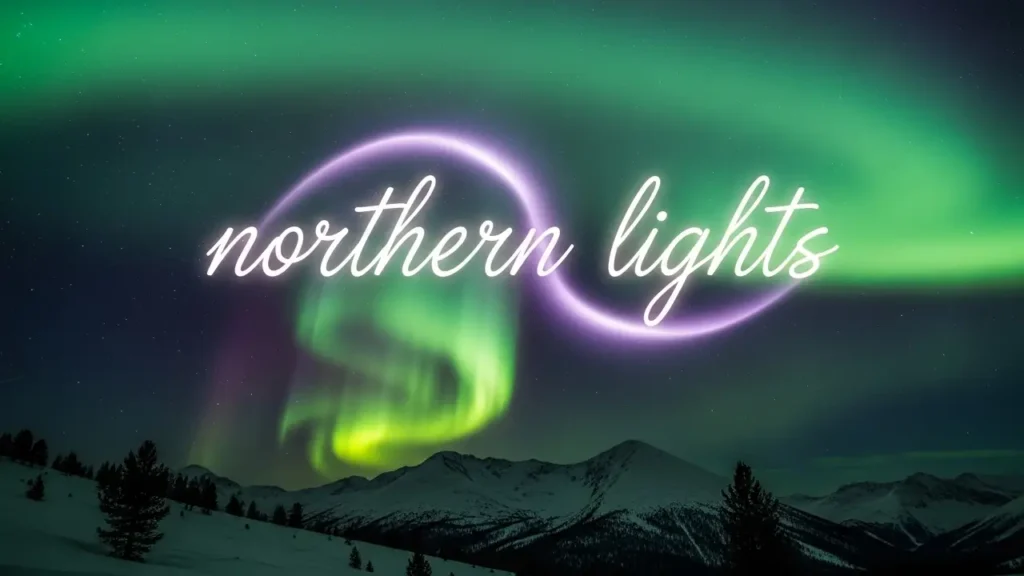
The northern lights, also known as the aurora borealis, are one of the most breathtaking natural phenomena visible from Earth. These glowing waves of light dance across the night sky in shades of green, pink, purple, and sometimes red, creating a magical experience for anyone lucky enough to witness them.
Seen mainly in high-latitude regions near the Arctic, the northern lights have fascinated travelers, scientists, and cultures for centuries. While their beauty is undeniable, their origin lies in a fascinating interaction between the Sun and Earth’s atmosphere.
How the Northern Lights Are Formed
The science behind the northern lights begins with the Sun. The Sun constantly emits charged particles, known as solar wind, which travel through space. When these particles reach Earth, they interact with the planet’s magnetic field.

As these particles collide with gases like oxygen and nitrogen in the upper atmosphere, energy is released in the form of light. This interaction produces the colorful displays that we recognize as auroras. Oxygen typically creates green and red colors, while nitrogen contributes to blue and purple hues.
Best Places to See the Northern Lights
To experience the northern lights, location is crucial. The phenomenon is most visible in regions close to the magnetic poles, where solar activity interacts more intensely with Earth’s atmosphere.
Some of the best destinations include northern parts of Norway, Sweden, Finland, Iceland, Canada, and Alaska. These regions offer clear, dark skies and ideal conditions for aurora viewing, especially during winter months.
Best Time to View the Northern Lights
The northern lights are visible throughout the year, but the best time to see them is between late September and early April. During this period, nights are longer and darker, increasing the chances of spotting auroras.
The peak viewing hours are usually between 10 PM and 2 AM. Clear skies, minimal light pollution, and high solar activity significantly improve the chances of witnessing this natural wonder.
Factors That Affect Northern Lights Visibility
Several factors influence how clearly the northern lights can be seen. Weather conditions play a major role, as clouds can block visibility. Similarly, light pollution from cities reduces the brightness of the aurora.
Solar activity is another important factor. During periods of high solar activity, known as solar storms, auroras become more intense and can even be seen in regions farther from the poles.
Cultural Significance of the Northern Lights
The northern lights have held deep cultural meaning for centuries. In many ancient cultures, they were believed to be spiritual or mystical phenomena. Some saw them as messages from the gods, while others associated them with spirits or omens.
In Scandinavian folklore, the aurora was thought to be reflections from the armor of warriors. Indigenous communities in North America often viewed the lights as ancestral spirits communicating with the living.
Photography Tips for Capturing the Northern Lights
Capturing the northern lights requires preparation and the right equipment. A camera with manual settings, a tripod, and a wide-angle lens are essential for high-quality shots.

Using long exposure settings allows more light to enter the camera, enhancing the colors and movement of the aurora. Keeping ISO levels balanced and adjusting shutter speed helps achieve clear, detailed images.
Interesting Facts About the Northern Lights
The northern lights are not unique to Earth. Similar phenomena have been observed on other planets like Jupiter and Saturn. These auroras occur due to similar interactions between solar particles and planetary magnetic fields.
Another interesting fact is that the southern hemisphere has its own version, called the aurora australis. Although less accessible, it offers equally stunning displays.
| Feature | Details |
|---|---|
| Scientific Name | Aurora Borealis |
| Primary Cause | Solar particles interacting with Earth’s magnetic field |
| Common Colors | Green, Pink, Purple, Red, Blue |
| Best Viewing Months | September to April |
| Peak Viewing Time | 10 PM to 2 AM |
| Best Locations | Norway, Iceland, Canada, Alaska, Finland, Sweden |
| Visibility Requirement | Dark, clear skies with low light pollution |
Why the Northern Lights Remain a Must-See Experience
The northern lights offer a unique blend of science and natural beauty. Their unpredictable nature makes each sighting special, and their vibrant colors create unforgettable memories for viewers.
For travelers and nature enthusiasts, witnessing the aurora borealis is often considered a once-in-a-lifetime experience. It serves as a reminder of the incredible forces at work in our universe.
FAQs About Northern Lights
1. What causes the northern lights?
The northern lights are caused by charged particles from the Sun colliding with gases in Earth’s atmosphere, producing light.
2. Can northern lights be seen without special equipment?
Yes, they are visible to the naked eye, especially in dark and clear conditions.
3. Are northern lights dangerous?
No, they are completely safe to watch and pose no harm to humans.
4. Why are the northern lights mostly green?
Green is the most common color due to oxygen molecules emitting light at specific altitudes.
5. Can northern lights appear in other parts of the world?
Yes, during strong solar storms, they can be visible at lower latitudes than usual.